






.png?width=60&height=60&name=AI%20Copilot%20logo%20(mega%20menu).png)


What Is an Intelligent Virtual Agent? Definition, Benefits, Use Cases
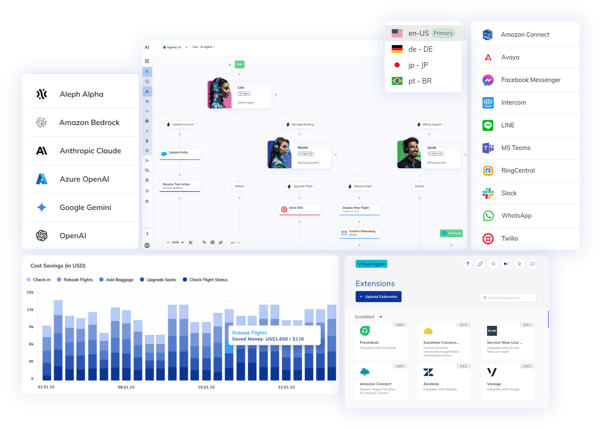
An intelligent virtual agent, or IVA, is an AI-powered conversational system that can understand user requests, manage dialogue, and complete tasks across chat and voice channels. Unlike basic bots, IVAs combine natural language understanding, orchestration, and integrations so they can move beyond answering questions and actually help users get something done.
For enterprise teams, what is an intelligent virtual agent (iva) matters because it affects how accurately AI systems respond, how efficiently workflows run, and how easily organizations can scale support and service across channels.
A strong implementation usually depends on the right combination of language understanding, workflow logic, content, analytics, and integrations. When those pieces work together, conversational experiences become more useful, more reliable, and more capable of producing measurable outcomes.


