


What Is a Chatbot or Virtual Assistant?

A chatbot, digital assistant, or virtual assistant refers to a software interface that enables users to interact with systems through conversation. These interactions typically occur through chat interfaces on websites, messaging platforms, mobile apps, or voice-enabled devices such as smart speakers.

While these terms are often used interchangeably, they can represent different levels of capability. At a high level, they all serve as conversational interfaces that allow users to ask questions, request actions, or complete tasks using natural language instead of navigating menus or forms.

Understanding the Terminology

Although commonly grouped together, chatbot and virtual assistant can describe different levels of sophistication.

  • Chatbot
    A general term for conversational interfaces, often associated with simpler, rule-based interactions such as FAQs or guided flows.
  • Digital Assistant
    A more advanced system that can handle context, integrate with multiple systems, and support more dynamic interactions.
  • Virtual Assistant
    Typically refers to highly intelligent systems that can perform tasks, automate workflows, and engage in multi-step, goal-oriented conversations.

In practice, many modern solutions combine elements of all three, making the distinctions less rigid and more dependent on capability.

How Chatbots Work

Basic chatbots typically operate using predefined rules or scripts. These systems:

  • Recognize keywords or phrases
  • Match inputs to predefined responses
  • Guide users through structured conversation paths

This approach works well for simple, repetitive use cases such as answering common questions or directing users to resources.


How Virtual Assistants Differ

Virtual assistants go beyond static interactions by incorporating advanced AI capabilities. These systems:

    • Understand user intent using natural language understanding
    • Maintain context across multiple turns in a conversation
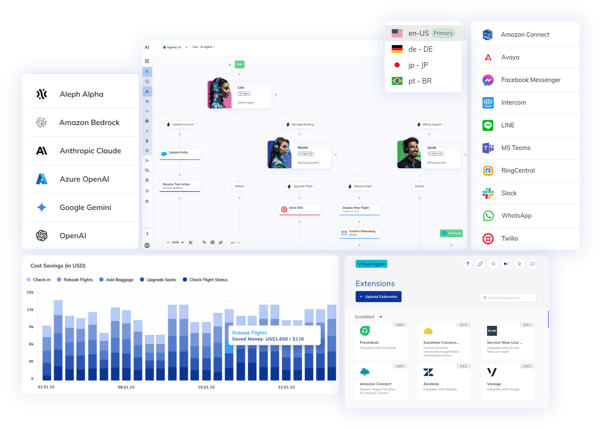
    • Integrate with backend systems such as CRM, billing, or support platforms
    • Execute actions such as updating accounts, processing requests, or retrieving data

This enables more complex, personalized, and outcome-driven interactions.

Key Capabilities of Modern Virtual Assistants

Modern virtual assistants are designed to deliver end-to-end automation and intelligent engagement.

  • Context Awareness
    Understands user history and maintains conversation continuity
  • System Integration
    Connects with enterprise systems to complete real tasks
  • Personalization
    Adapts responses based on user data and behavior
  • Omnichannel Support
    Operates across chat, voice, mobile, and messaging platforms
  • Continuous Learning
    Improves performance over time through machine learning

Common Use Cases

Both chatbots and virtual assistants are widely used across industries to improve efficiency and user experience.


Customer Support

  • Answering questions and resolving common issues
  • Handling high volumes of inquiries instantly
  • Escalating complex cases to human agents

Sales and Engagement

  • Guiding users through product selection
  • Qualifying leads and capturing intent
  • Providing recommendations

Employee Support

  • Assisting with HR, IT, and internal requests
  • Automating onboarding and training processes
  • Providing access to internal knowledge bases

Voice and Contact Centers

  • Powering voice bots and IVAs
  • Automating call routing and authentication
  • Supporting agents with real-time insights

Benefits for Organizations

Implementing chatbots and virtual assistants can drive measurable business impact.

  • Faster Response Times
    Immediate answers without wait times
  • Cost Reduction
    Automation reduces reliance on manual support
  • Improved User Experience
    Natural, conversational interactions
  • Increased Efficiency
    Handles repetitive tasks at scale
  • Scalability
    Supports growth without increasing headcount

When to Use a Chatbot vs a Virtual Assistant

Choosing between a chatbot and a virtual assistant depends on the complexity of the use case.

  • Use a chatbot for simple, high-volume tasks such as FAQs or basic routing
  • Use a virtual assistant for complex workflows, integrations, and personalized interactions

Many organizations start with chatbots and evolve toward more advanced virtual assistants as their needs grow. 

The Evolution Toward Intelligent Assistants

The distinction between chatbots and virtual assistants is becoming less defined as technology advances. Modern platforms increasingly combine rule-based automation with AI-driven intelligence to deliver more seamless and effective conversations.

This evolution is enabling organizations to move from simple question-and-answer interactions to fully automated, end-to-end digital experiences.

Key Takeaway

Chatbots and virtual assistants are conversational interfaces that allow users to interact with systems using natural language. While chatbots typically handle simple, rule-based interactions, virtual assistants provide more advanced, context-aware, and integrated experiences that can automate complex tasks and workflows.