







.png?width=60&height=60&name=AI%20Copilot%20logo%20(mega%20menu).png)


How does conversational AI reduce operational costs?
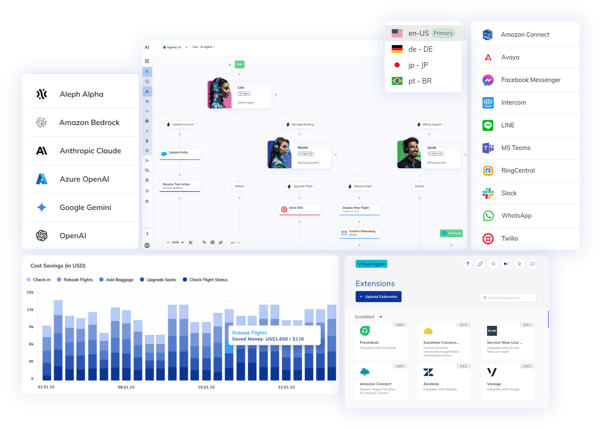
Conversational AI reduces operational costs by taking routine, repeatable work out of manual queues and handling it through automation. It also lowers costs indirectly by improving triage, shortening handle times, and helping human agents work more efficiently on the interactions that still require them.
For enterprise teams, how does conversational ai reduce operational costs matters because it affects how accurately AI systems respond, how efficiently workflows run, and how easily organizations can scale support and service across channels.
A strong implementation usually depends on the right combination of language understanding, workflow logic, content, analytics, and integrations. When those pieces work together, conversational experiences become more useful, more reliable, and more capable of producing measurable outcomes.


