



What Is Conversational Automation?

Conversational automation refers to the ability of a system to not only understand and respond to user input, but to complete actions on behalf of the user through a conversational interface. It moves beyond simple, informational interactions and enables users to accomplish real tasks using natural language.

Instead of just answering questions, conversational automation guides users through processes such as checking order status, resetting passwords, filing support tickets, or making reservations, all within a conversation.

Conversational AI vs Conversational Automation

While closely related, conversational AI and conversational automation serve different purposes.

  • Conversational AI focuses on understanding language and generating responses
  • Conversational automation focuses on executing actions and completing workflows

Conversational AI provides the intelligence, while conversational automation delivers outcomes.

From Information to Action

Traditional chatbots often provide static, informational responses. Conversational automation transforms this experience by enabling task completion.

  • Informational experience
    Answers questions such as “What are your hours?” or “Where is my order?”
  • Action-oriented experience
    Completes tasks such as “Track my order,” “Reset my password,” or “Book an appointment”

This shift from answering to doing is what defines conversational automation.

How Conversational Automation Works

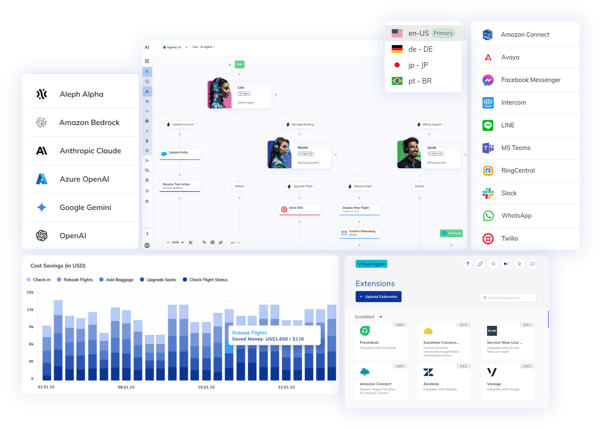
Conversational automation combines multiple components to deliver end-to-end task completion.

  • Intent Recognition
    Identifies what the user wants to accomplish
  • Dialogue Management
    Guides the user through the necessary steps
  • Workflow Orchestration
    Connects to backend systems to execute actions
  • System Integration
    Retrieves or updates data in CRM, ERP, or other platforms
  • Confirmation and Feedback
    Ensures the task is completed successfully and communicates results

This orchestration allows conversations to become fully functional workflows.

Common Use Cases

Customer Service

  • Checking order or ticket status
  • Initiating returns or exchanges
  • Filing and tracking support requests

Account Management

  • Resetting passwords
  • Updating account information
  • Managing subscriptions

Sales and Booking

  • Scheduling appointments or demos
  • Making reservations
  • Completing transactions

IT and Employee Support

  • Submitting service requests
  • Provisioning access or permissions

Automating internal workflows  

Benefits of Conversational Automation

Conversational automation delivers both operational and experience improvements.

  • Faster Task Completion
    Users complete actions in real time without delays
  • Reduced Operational Costs
    Automation lowers reliance on manual processes
  • Improved User Experience
    Natural, guided interactions reduce friction
  • Increased Efficiency
    Streamlines workflows and eliminates repetitive tasks
  • Scalability
    Handles large volumes of requests simultaneously

Why Conversational Automation Matters

As customer expectations evolve, users no longer want just answers, they want outcomes. Conversational automation meets this need by turning conversations into action.

It enables organizations to:

  • Deliver self-service that actually resolves issues
  • Reduce dependency on human agents for routine tasks
  • Improve consistency and accuracy across interactions
  • Connect conversations directly to business systems

This makes conversational automation a critical component of modern digital operations.

Why Conversational AI Matters Now

Customer expectations have shifted toward always-on, digital-first experiences. At the same time, organizations face pressure to reduce costs and improve efficiency.

Conversational AI addresses both challenges by enabling:

  • Always-available support across channels
  • Scalable automation without increasing headcount
  • Consistent, high-quality interactions
  • Data-driven insights for continuous improvement

This makes conversational AI a foundational capability for modern digital transformation. 

Best Practices for Implementation

To maximize success, organizations should approach conversational automation strategically.

  • Start with high-volume, repeatable tasks
  • Ensure deep integration with backend systems
  • Design guided, intuitive conversation flows
  • Continuously monitor and optimize performance
  • Use analytics to identify gaps and improve coverage

Organizations that focus on both usability and system integration achieve the strongest results.

Key Takeaway

Conversational automation enables systems to move beyond answering questions and actually complete tasks through conversation. By combining AI-driven understanding with workflow execution, it transforms interactions into outcomes and delivers measurable improvements in efficiency and user experience.