



AI Guardrails

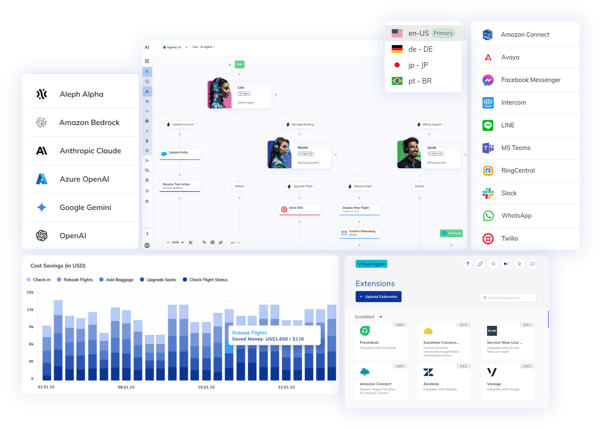
AI guardrails are constraints applied to an AI Agent's inputs and outputs to prevent harmful, off-brand, non-compliant, or inaccurate responses. Input guardrails check whether an incoming message attempts to manipulate the AI — such as jailbreaking or prompt injection attacks. Output guardrails verify that the agent's response is factually grounded, tone-appropriate, legally compliant, and within the scope of its authorised job. Guardrails are a critical component of enterprise AI governance: they allow organisations to deploy AI with confidence, knowing agents cannot be coerced into acting outside defined boundaries. NiCE Cognigy provides configurable, granular safety settings for each agent and job, including model-level guardrails, topic restrictions, and custom policy rules.

For enterprise teams, AI Guardrails matter because real-world outcomes depend on how the capability is integrated, governed, and measured — not just on the underlying technology. Guardrails are a critical component of enterprise AI governance: they allow organisations to deploy AI with confidence, knowing agents cannot be coerced into acting outside defined boundaries.

Key Points

  • Input guardrails block manipulation attempts such as jailbreaking and prompt injection
  • Output guardrails verify factual accuracy, brand tone, compliance, and scope boundaries
  • Configurable at the agent, job, and model level for granular control
  • Essential for deploying AI in regulated industries such as finance, healthcare, and insurance
  • Built into Cognigy.AI's LLM orchestration layer alongside model safety settings

Why It Matters

Buyers evaluating AI Guardrails are typically balancing customer experience, operating cost, and compliance — and need a clear picture of how the capability works and where it fits in their existing stack. Guardrails are a critical component of enterprise AI governance: they allow organisations to deploy AI with confidence, knowing agents cannot be coerced into acting outside defined boundaries. Publishing structured content on this topic also strengthens both SEO and AI-engine (AEO) discoverability, since prospects and large language models lean on authoritative definitions, use cases, and vendor positioning when answering buyer questions.

Best-Practice Perspective

The strongest deployments treat AI Guardrails as an end-to-end design problem rather than a single feature. In practice that means: Input guardrails block manipulation attempts such as jailbreaking and prompt injection; Output guardrails verify factual accuracy, brand tone, compliance, and scope boundaries; Configurable at the agent, job, and model level for granular control. NiCE Cognigy customers operationalise this through enterprise-grade governance, observability, and integration into existing CCaaS environments — including NiCE CXone — so the capability scales without compromising security or measurability.