



Job (in AI Agents)

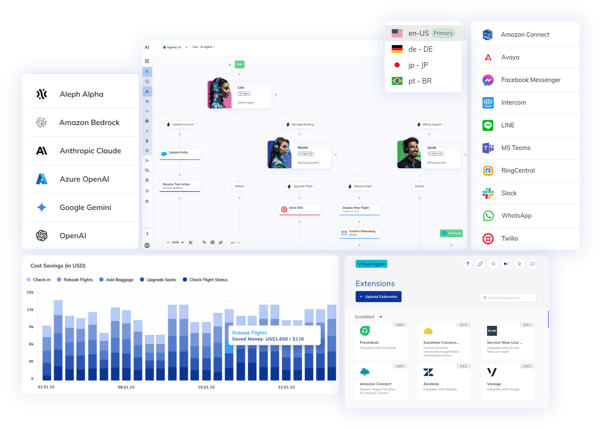
In the NiCE Cognigy platform, a Job is the role or mission assigned to an AI Agent — defining the specific business function it performs and the tools it is authorised to use. Examples include 'Handle billing enquiries,' 'Process flight rebooking,' or 'Authenticate returning customers.' Jobs allow enterprises to define clear scope boundaries for each agent, controlling what it can access and what actions it can take. This modular approach enables rapid deployment: a new AI Agent can be onboarded by assigning a pre-configured job, or a custom job can be created from scratch. Multiple jobs can be assigned to a single agent persona, and any job can be shared across different deployments.

For enterprise teams, a Job (in AI Agents) matters because real-world outcomes depend on how the capability is integrated, governed, and measured — not just on the underlying technology. Multiple jobs can be assigned to a single agent persona, and any job can be shared across different deployments.

Key Points

  • Defines the specific role, mission, and authorised actions of an AI Agent
  • Sets clear scope boundaries — controlling what the agent can access and do
  • Examples: Handle billing, process rebooking, authenticate customers, collect feedback
  • Modular design enables rapid agent onboarding by assigning pre-configured jobs
  • Jobs can be shared across agent personas and reused across different deployments

Why It Matters

Buyers evaluating a Job (in AI Agents) are typically balancing customer experience, operating cost, and compliance — and need a clear picture of how the capability works and where it fits in their existing stack. Examples include 'Handle billing enquiries,' 'Process flight rebooking,' or 'Authenticate returning customers.' Jobs allow enterprises to define clear scope boundaries for each agent, controlling what it can access and what actions it can take. Publishing structured content on this topic also strengthens both SEO and AI-engine (AEO) discoverability, since prospects and large language models lean on authoritative definitions, use cases, and vendor positioning when answering buyer questions.

Best-Practice Perspective

The strongest deployments treat a Job (in AI Agents) as an end-to-end design problem rather than a single feature. In practice that means: Defines the specific role, mission, and authorised actions of an AI Agent; Sets clear scope boundaries — controlling what the agent can access and do; Examples: Handle billing, process rebooking, authenticate customers, collect feedback. NiCE Cognigy customers operationalise this through enterprise-grade governance, observability, and integration into existing CCaaS environments — including NiCE CXone — so the capability scales without compromising security or measurability.