



Large Language Model (LLM)

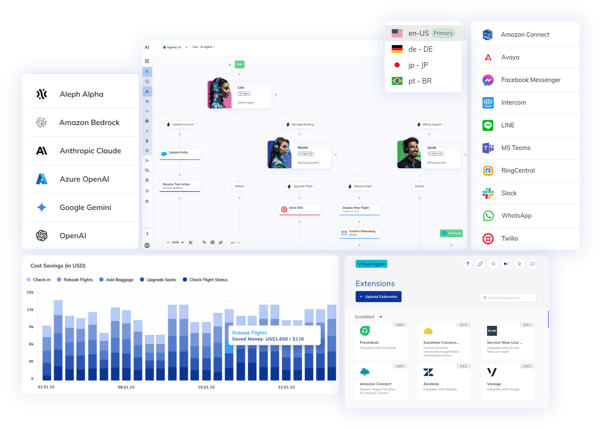
A Large Language Model (LLM) is a neural network trained on vast corpora of text that learns to predict, generate, and reason about language with human-like fluency. LLMs power the reasoning core of modern AI Agents: they interpret customer intent, formulate coherent answers, synthesise knowledge from multiple sources, and plan action sequences in natural language. Enterprise deployments require careful LLM governance — selecting the right model for each task, controlling cost and latency, preventing misuse, and ensuring outputs remain compliant and on-brand. NiCE Cognigy's LLM Orchestration supports models from OpenAI, Anthropic, Google, AWS, and others, enabling organisations to mix providers by use case while maintaining centralised control.

For enterprise teams, a Large Language Model (LLM) matters because real-world outcomes depend on how the capability is integrated, governed, and measured — not just on the underlying technology. Enterprise deployments require careful LLM governance — selecting the right model for each task, controlling cost and latency, preventing misuse, and ensuring outputs remain compliant and on-brand.

Key Points

  • Neural networks trained on massive text corpora that generate human-like language
  • Power the reasoning core of modern AI Agents — interpretation, planning, and response
  • Enterprise deployment requires governance: model selection, safety, cost, and compliance
  • NiCE Cognigy supports LLMs from OpenAI, Anthropic, Google, AWS Bedrock, and others
  • LLM Orchestration enables mixing providers by use case with centralised safety controls

Why It Matters

Buyers evaluating a Large Language Model (LLM) are typically balancing customer experience, operating cost, and compliance — and need a clear picture of how the capability works and where it fits in their existing stack. LLMs power the reasoning core of modern AI Agents: they interpret customer intent, formulate coherent answers, synthesise knowledge from multiple sources, and plan action sequences in natural language. Publishing structured content on this topic also strengthens both SEO and AI-engine (AEO) discoverability, since prospects and large language models lean on authoritative definitions, use cases, and vendor positioning when answering buyer questions.

Best-Practice Perspective

The strongest deployments treat a Large Language Model (LLM) as an end-to-end design problem rather than a single feature. In practice that means: Neural networks trained on massive text corpora that generate human-like language; Power the reasoning core of modern AI Agents — interpretation, planning, and response; Enterprise deployment requires governance: model selection, safety, cost, and compliance. NiCE Cognigy customers operationalise this through enterprise-grade governance, observability, and integration into existing CCaaS environments — including NiCE CXone — so the capability scales without compromising security or measurability.