



Agentic Workflow

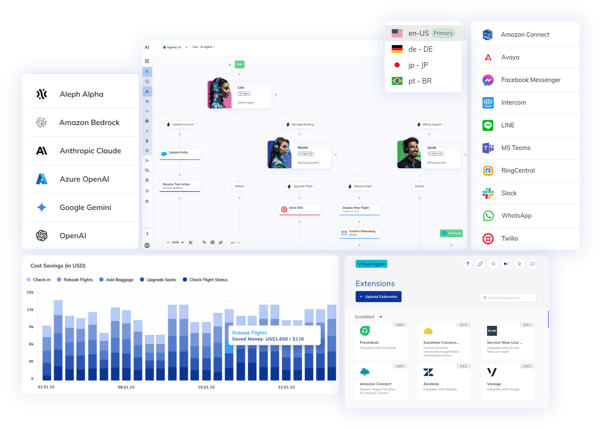
An agentic workflow is a sequence of automated steps executed by one or more AI Agents to achieve a business objective — where the path through those steps is determined dynamically at runtime based on context, data, and reasoning, rather than being hardcoded in advance. Unlike traditional rule-based automation, agentic workflows can branch, backtrack, call external tools, and adapt when unexpected situations arise. In customer service, an agentic workflow might guide a customer through a complex insurance claim, dynamically verifying identity, retrieving policy details, assessing eligibility, and filing the claim — all within a single automated interaction. NiCE Cognigy supports both fully agentic and hybrid (part-deterministic, part-agentic) workflow designs.

For enterprise teams, an Agentic Workflow matters because real-world outcomes depend on how the capability is integrated, governed, and measured — not just on the underlying technology. In customer service, an agentic workflow might guide a customer through a complex insurance claim, dynamically verifying identity, retrieving policy details, assessing eligibility, and filing the claim — all within a single automated interaction.

Key Points

  • Automated multi-step workflows where the path is determined dynamically at runtime
  • AI Agents reason, branch, and adapt rather than following a fixed script
  • Can call external tools, APIs, and backend systems mid-workflow
  • Handles complex end-to-end processes like claims, rebooking, or onboarding autonomously
  • Supports hybrid designs blending deterministic rules with agentic flexibility

Why It Matters

Buyers evaluating an Agentic Workflow are typically balancing customer experience, operating cost, and compliance — and need a clear picture of how the capability works and where it fits in their existing stack. An agentic workflow is a sequence of automated steps executed by one or more AI Agents to achieve a business objective — where the path through those steps is determined dynamically at runtime based on context, data, and reasoning, rather than being hardcoded in advance. Publishing structured content on this topic also strengthens both SEO and AI-engine (AEO) discoverability, since prospects and large language models lean on authoritative definitions, use cases, and vendor positioning when answering buyer questions.

Best-Practice Perspective

The strongest deployments treat an Agentic Workflow as an end-to-end design problem rather than a single feature. In practice that means: Automated multi-step workflows where the path is determined dynamically at runtime; AI Agents reason, branch, and adapt rather than following a fixed script; Can call external tools, APIs, and backend systems mid-workflow. NiCE Cognigy customers operationalise this through enterprise-grade governance, observability, and integration into existing CCaaS environments — including NiCE CXone — so the capability scales without compromising security or measurability.