



AI Agent

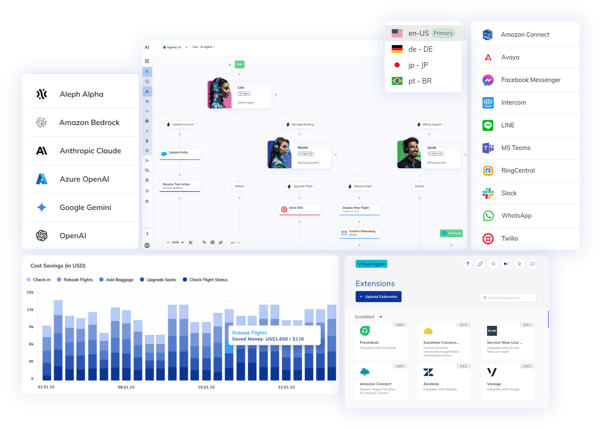
An AI Agent is an autonomous software system that perceives its environment through inputs such as text, voice, and data, reasons about what action to take using one or more AI models, executes that action via integrated tools or APIs, and evaluates the result — iterating until a goal is achieved or a handover is appropriate. Unlike a chatbot that maps inputs to predefined outputs, an AI Agent dynamically plans and adapts to unexpected conditions. In the NiCE Cognigy context, AI Agents are enterprise-grade, goal-driven digital workers capable of handling the full complexity of customer service interactions — from simple FAQs to multi-step processes like rebooking, claims processing, or identity verification — across voice and digital channels simultaneously.

For enterprise teams, an AI Agent matters because real-world outcomes depend on how the capability is integrated, governed, and measured — not just on the underlying technology. Unlike a chatbot that maps inputs to predefined outputs, an AI Agent dynamically plans and adapts to unexpected conditions.

Key Points

  • Autonomous digital workers that perceive, reason, act, and adapt toward goals
  • Far beyond chatbots — AI Agents handle multi-step, complex processes end to end
  • Execute actions via integrated tools, APIs, and backend systems
  • Operate across voice and digital channels simultaneously at enterprise scale
  • NiCE Cognigy AI Agents power over one billion interactions annually for 1,250+ brands 

Why It Matters

Buyers evaluating an AI Agent are typically balancing customer experience, operating cost, and compliance — and need a clear picture of how the capability works and where it fits in their existing stack. An AI Agent is an autonomous software system that perceives its environment through inputs such as text, voice, and data, reasons about what action to take using one or more AI models, executes that action via integrated tools or APIs, and evaluates the result — iterating until a goal is achieved or a handover is appropriate. Publishing structured content on this topic also strengthens both SEO and AI-engine (AEO) discoverability, since prospects and large language models lean on authoritative definitions, use cases, and vendor positioning when answering buyer questions.

Best-Practice Perspective

The strongest deployments treat an AI Agent as an end-to-end design problem rather than a single feature. In practice that means: Autonomous digital workers that perceive, reason, act, and adapt toward goals; Far beyond chatbots — AI Agents handle multi-step, complex processes end to end; Execute actions via integrated tools, APIs, and backend systems. NiCE Cognigy customers operationalise this through enterprise-grade governance, observability, and integration into existing CCaaS environments — including NiCE CXone — so the capability scales without compromising security or measurability.