




Automated Speech Recognition (ASR)

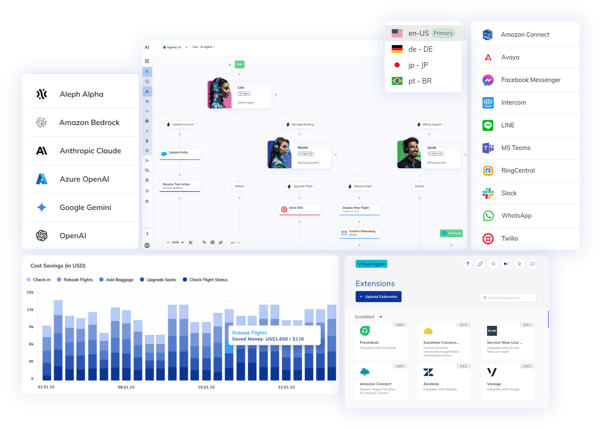
Automated Speech Recognition (ASR) — also called speech-to-text (STT) — is the AI technology that converts spoken audio into machine-readable text. ASR is the entry point of every voice-based AI interaction: it must accurately transcribe what the customer says, even under challenging conditions such as background noise, strong accents, fast speech, or domain-specific terminology. Modern ASR systems are based on end-to-end deep learning models trained on billions of hours of speech data. NiCE Cognigy integrates with multiple ASR providers, allowing enterprises to select the engine that performs best for their specific language, domain, and channel — with support for over 100 languages and domain vocabulary adaptation.

For enterprise teams, Automated Speech Recognition (ASR) matters because real-world outcomes depend on how the capability is integrated, governed, and measured — not just on the underlying technology. Modern ASR systems are based on end-to-end deep learning models trained on billions of hours of speech data.

Key Points

  • Converts spoken audio to machine-readable text in real time
  • The entry point of every voice AI interaction — accuracy here determines everything downstream
  • Modern ASR uses deep learning trained on billions of hours of diverse speech
  • NiCE Cognigy supports multiple ASR providers for best-fit accuracy per use case
  • Supports 100+ languages and domain-specific vocabulary adaptation for higher accuracy

Why It Matters

Buyers evaluating Automated Speech Recognition (ASR) are typically balancing customer experience, operating cost, and compliance — and need a clear picture of how the capability works and where it fits in their existing stack. Automated Speech Recognition (ASR) — also called speech-to-text (STT) — is the AI technology that converts spoken audio into machine-readable text. Publishing structured content on this topic also strengthens both SEO and AI-engine (AEO) discoverability, since prospects and large language models lean on authoritative definitions, use cases, and vendor positioning when answering buyer questions.

Best-Practice Perspective

The strongest deployments treat Automated Speech Recognition (ASR) as an end-to-end design problem rather than a single feature. In practice that means: Converts spoken audio to machine-readable text in real time; The entry point of every voice AI interaction — accuracy here determines everything downstream; Modern ASR uses deep learning trained on billions of hours of diverse speech. NiCE Cognigy customers operationalise this through enterprise-grade governance, observability, and integration into existing CCaaS environments — including NiCE CXone — so the capability scales without compromising security or measurability.