



Cloud-Native Architecture

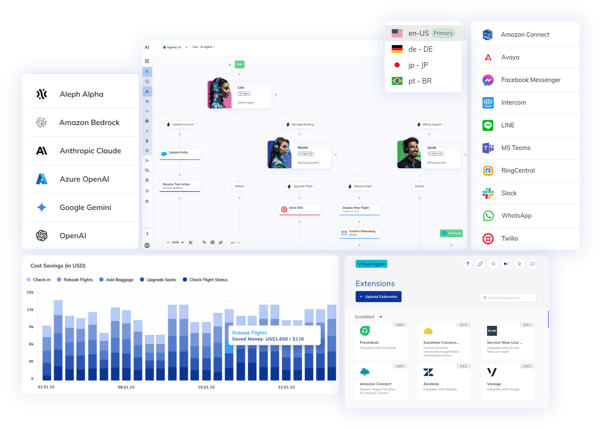
Cloud-native architecture refers to design principles and technologies used to build applications specifically for cloud environments — leveraging microservices, containerisation via Kubernetes, declarative APIs, and continuous delivery pipelines. Cloud-native applications are elastic, resilient, observable, and updatable without downtime. For contact centre AI, cloud-native architecture is essential: customer contact volumes fluctuate unpredictably, and any AI platform must scale to handle peak demand without degradation. Cognigy.AI is built on Kubernetes and a microservices architecture, supporting deployment on any major cloud provider and on-premises where required — providing unlimited scaling and built-in resilience.

For enterprise teams, Cloud-Native Architecture matters because real-world outcomes depend on how the capability is integrated, governed, and measured — not just on the underlying technology. Cloud-native architecture refers to design principles and technologies used to build applications specifically for cloud environments — leveraging microservices, containerisation via Kubernetes, declarative APIs, and continuous delivery pipelines.

Key Points

  • Designed for cloud environments using microservices, containers, and continuous delivery
  • Elastic scaling handles unpredictable contact volume spikes without performance degradation
  • Resilient architecture means individual component failures do not cause system-wide outages
  • Cognigy.AI is built on Kubernetes and supports all major cloud providers
  • Enables 25,000+ concurrent interactions with enterprise-grade reliability and uptime

Why It Matters

Buyers evaluating Cloud-Native Architecture are typically balancing customer experience, operating cost, and compliance — and need a clear picture of how the capability works and where it fits in their existing stack. For contact centre AI, cloud-native architecture is essential: customer contact volumes fluctuate unpredictably, and any AI platform must scale to handle peak demand without degradation. Publishing structured content on this topic also strengthens both SEO and AI-engine (AEO) discoverability, since prospects and large language models lean on authoritative definitions, use cases, and vendor positioning when answering buyer questions.

Best-Practice Perspective

The strongest deployments treat Cloud-Native Architecture as an end-to-end design problem rather than a single feature. In practice that means: Designed for cloud environments using microservices, containers, and continuous delivery; Elastic scaling handles unpredictable contact volume spikes without performance degradation; Resilient architecture means individual component failures do not cause system-wide outages. NiCE Cognigy customers operationalise this through enterprise-grade governance, observability, and integration into existing CCaaS environments — including NiCE CXone — so the capability scales without compromising security or measurability.