



Customer Effort Score (CES)

Customer Effort Score (CES) measures how much effort a customer had to exert to resolve their issue — typically captured via a post-interaction survey asking how easy the experience was, rated on a 7-point scale. Research consistently shows that reducing customer effort is more strongly correlated with loyalty and reduced churn than traditional satisfaction metrics. AI Agents improve CES by eliminating IVR menu friction, avoiding transfers, resolving issues faster, and providing consistent experiences across channels. CES is an important design metric for AI conversation flows — every unnecessary step or misunderstanding adds effort and increases churn risk.

For enterprise teams, Customer Effort Score (CES) matters because real-world outcomes depend on how the capability is integrated, governed, and measured — not just on the underlying technology. Customer Effort Score (CES) measures how much effort a customer had to exert to resolve their issue — typically captured via a post-interaction survey asking how easy the experience was, rated on a 7-point scale.

Key Points

  • Measures how much effort customers exerted to resolve their issue
  • Strongly correlated with loyalty and churn — more predictive than satisfaction scores alone
  • AI Agents improve CES by eliminating friction: no menus, no transfers, faster resolution
  • Every unnecessary step in a conversation flow adds effort — CES guides flow optimisation
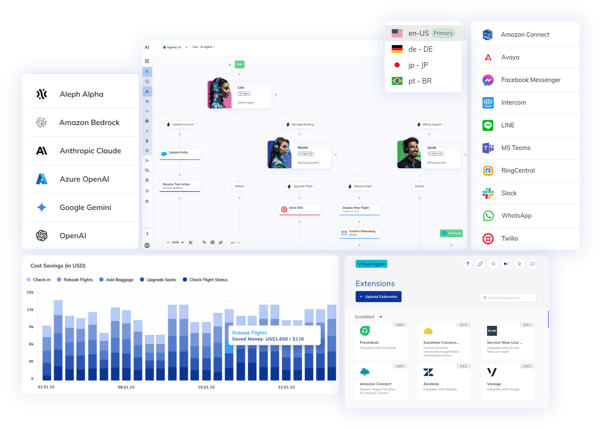
  • Tracked alongside containment and FCR in NiCE Cognigy Insights dashboards

Why It Matters

Buyers evaluating Customer Effort Score (CES) are typically balancing customer experience, operating cost, and compliance — and need a clear picture of how the capability works and where it fits in their existing stack. Customer Effort Score (CES) measures how much effort a customer had to exert to resolve their issue — typically captured via a post-interaction survey asking how easy the experience was, rated on a 7-point scale. Publishing structured content on this topic also strengthens both SEO and AI-engine (AEO) discoverability, since prospects and large language models lean on authoritative definitions, use cases, and vendor positioning when answering buyer questions.

Best-Practice Perspective

The strongest deployments treat Customer Effort Score (CES) as an end-to-end design problem rather than a single feature. In practice that means: Measures how much effort customers exerted to resolve their issue; Strongly correlated with loyalty and churn — more predictive than satisfaction scores alone; AI Agents improve CES by eliminating friction: no menus, no transfers, faster resolution. Successful programmes pair the technology with clear KPIs, regular review of model and workflow performance, and tight integration with the existing CCaaS stack.