



Digital Self-Service

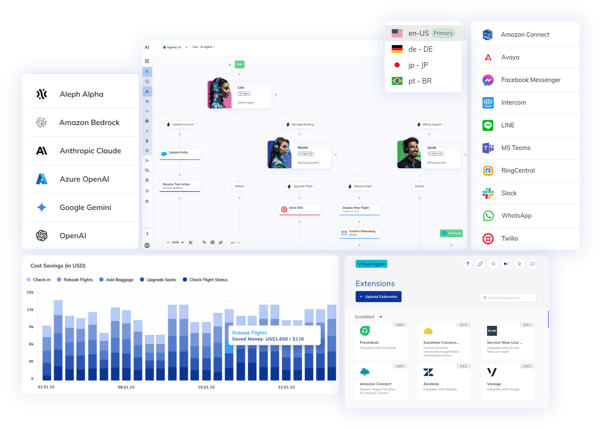
Digital self-service is the capability for customers to resolve their own enquiries, complete transactions, and access information through digital channels without requiring human agent assistance. Effective digital self-service requires accurate intent understanding, access to the right knowledge and backend systems, and a user experience intuitive enough for customers to succeed independently. AI Agents have transformed digital self-service from simple FAQ retrieval to the completion of complex, multi-step processes such as mortgage applications, flight rebooking, and technical troubleshooting — all without human involvement. High containment rates are the primary measure of digital self-service effectiveness.

For enterprise teams, Digital Self-Service matters because real-world outcomes depend on how the capability is integrated, governed, and measured — not just on the underlying technology. Effective digital self-service requires accurate intent understanding, access to the right knowledge and backend systems, and a user experience intuitive enough for customers to succeed independently.

Key Points

  • Customers resolve issues independently through digital channels without agent assistance
  • Requires accurate NLU, backend integrations, and intuitive conversation design
  • AI Agents now handle complex multi-step processes — not just FAQ lookups
  • High containment rate is the primary success metric for digital self-service deployments
  • NiCE Cognigy enables digital self-service across web, mobile, and messaging channels

Why It Matters

Buyers evaluating Digital Self-Service are typically balancing customer experience, operating cost, and compliance — and need a clear picture of how the capability works and where it fits in their existing stack. Digital self-service is the capability for customers to resolve their own enquiries, complete transactions, and access information through digital channels without requiring human agent assistance. Publishing structured content on this topic also strengthens both SEO and AI-engine (AEO) discoverability, since prospects and large language models lean on authoritative definitions, use cases, and vendor positioning when answering buyer questions.

Best-Practice Perspective

The strongest deployments treat Digital Self-Service as an end-to-end design problem rather than a single feature. In practice that means: Customers resolve issues independently through digital channels without agent assistance; Requires accurate NLU, backend integrations, and intuitive conversation design; AI Agents now handle complex multi-step processes — not just FAQ lookups. Successful programmes pair the technology with clear KPIs, regular review of model and workflow performance, and tight integration with the existing CCaaS stack.