



Skill-Based Routing

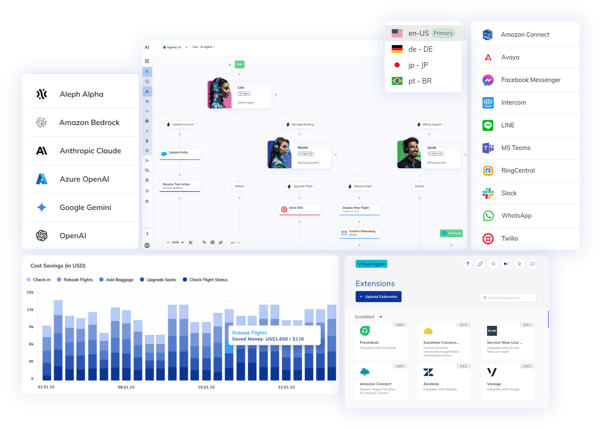
Skill-based routing directs incoming customer interactions to the agent — human or AI — most qualified to resolve that specific type of enquiry, rather than simply routing to whoever is available next. Agent skills are defined in a routing matrix (language proficiency, product expertise, technical certification) and interactions are scored against these attributes before being assigned. Skill-based routing improves first-contact resolution rates, reduces transfers, and increases satisfaction by ensuring complex issues are handled by agents with the right expertise. AI-powered routing engines extend this model dynamically, incorporating real-time sentiment, predicted complexity, and agent performance history.

For enterprise teams, Skill-Based Routing matters because real-world outcomes depend on how the capability is integrated, governed, and measured — not just on the underlying technology. Skill-based routing improves first-contact resolution rates, reduces transfers, and increases satisfaction by ensuring complex issues are handled by agents with the right expertise.

Key Points

  • Routes interactions to the most qualified agent rather than the next available
  • Skills matrix defines language, product expertise, and topic capabilities per agent
  • Reduces transfers and mismatches that lengthen handle time and frustrate customers
  • AI extends skill-based routing with real-time sentiment and predicted complexity signals
  • Integrates with NiCE Cognigy NLU to match intent to the best-fit human or AI resource

Why It Matters

Buyers evaluating Skill-Based Routing are typically balancing customer experience, operating cost, and compliance — and need a clear picture of how the capability works and where it fits in their existing stack. Skill-based routing directs incoming customer interactions to the agent — human or AI — most qualified to resolve that specific type of enquiry, rather than simply routing to whoever is available next. Publishing structured content on this topic also strengthens both SEO and AI-engine (AEO) discoverability, since prospects and large language models lean on authoritative definitions, use cases, and vendor positioning when answering buyer questions.

Best-Practice Perspective

The strongest deployments treat Skill-Based Routing as an end-to-end design problem rather than a single feature. In practice that means: Routes interactions to the most qualified agent rather than the next available; Skills matrix defines language, product expertise, and topic capabilities per agent; Reduces transfers and mismatches that lengthen handle time and frustrate customers. Successful programmes pair the technology with clear KPIs, regular review of model and workflow performance, and tight integration with the existing CCaaS stack.