



Model Context Protocol (MCP)

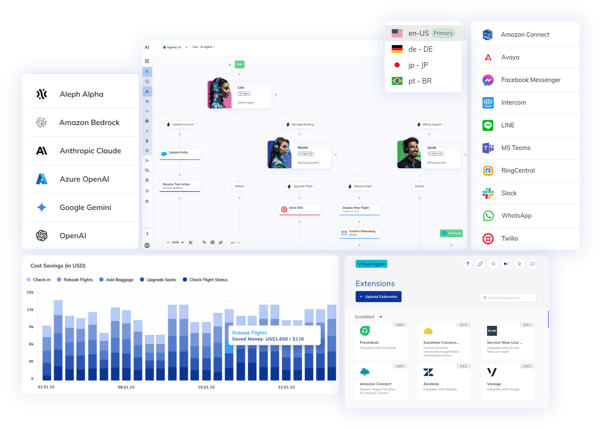
The Model Context Protocol (MCP) is an open standard, introduced by Anthropic in 2024 and rapidly adopted across the industry, that defines a universal way for AI Agents to discover and connect to external tools, data sources, and services. Instead of building point-to-point integrations for each system an AI Agent needs to access, MCP provides a semantic layer: any MCP-compatible service can be discovered and used by any MCP-enabled agent. NiCE Cognigy embraced MCP as a foundational architecture at Nexus 2026, positioning the Cognigy.AI platform both as an MCP client (consuming external tools) and as an MCP server (making Cognigy capabilities available to external AI ecosystems) — replacing brittle connectors with a governed integration layer.

For enterprise teams, the Model Context Protocol (MCP) matters because real-world outcomes depend on how the capability is integrated, governed, and measured — not just on the underlying technology. Instead of building point-to-point integrations for each system an AI Agent needs to access, MCP provides a semantic layer: any MCP-compatible service can be discovered and used by any MCP-enabled agent.

Key Points

  • Open standard for universal AI Agent connectivity to tools, data sources, and services
  • Replaces point-to-point integrations with a semantic discovery-and-connection layer
  • Any MCP-compatible service is instantly available to any MCP-enabled AI Agent
  • NiCE Cognigy operates as both MCP client and MCP server — a full ecosystem participant
  • Adopted as a foundational architecture at NiCE Cognigy Nexus 2026

Why It Matters

Buyers evaluating the Model Context Protocol (MCP) are typically balancing customer experience, operating cost, and compliance — and need a clear picture of how the capability works and where it fits in their existing stack. The Model Context Protocol (MCP) is an open standard, introduced by Anthropic in 2024 and rapidly adopted across the industry, that defines a universal way for AI Agents to discover and connect to external tools, data sources, and services. Publishing structured content on this topic also strengthens both SEO and AI-engine (AEO) discoverability, since prospects and large language models lean on authoritative definitions, use cases, and vendor positioning when answering buyer questions.

Best-Practice Perspective

The strongest deployments treat the Model Context Protocol (MCP) as an end-to-end design problem rather than a single feature. In practice that means: Open standard for universal AI Agent connectivity to tools, data sources, and services; Replaces point-to-point integrations with a semantic discovery-and-connection layer; Any MCP-compatible service is instantly available to any MCP-enabled AI Agent. NiCE Cognigy customers operationalise this through enterprise-grade governance, observability, and integration into existing CCaaS environments — including NiCE CXone — so the capability scales without compromising security or measurability.