



Voice Engagement Channel Component

A Voice Engagement Channel Component is a modular architectural element within a conversational AI platform that manages the voice channel layer of customer interactions. It serves as the bridge between the telephony infrastructure — SIP trunks, PBX systems, and carrier networks — and the AI engine that processes customer intent and generates responses. By encapsulating voice-specific functionality into a dedicated component, it allows organizations to configure, manage, and scale voice interactions independently of other channels.

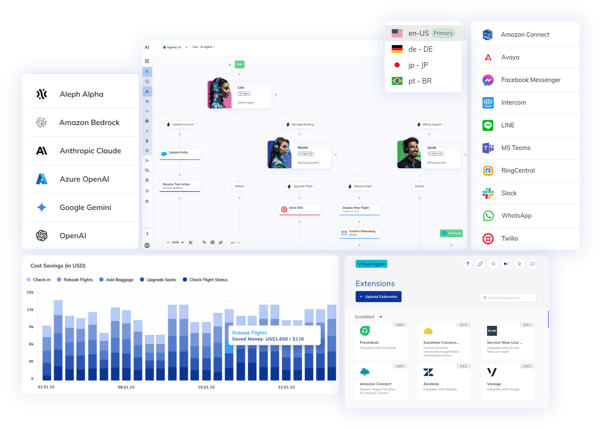
Within a platform like Cognigy.AI, the Voice Engagement Channel Component handles the technical requirements of voice delivery: connecting inbound and outbound calls, managing audio streams, integrating ASR and TTS providers, and routing interactions to the appropriate AI flow or human agent. This modular approach enables enterprises to deploy voice automation without rebuilding their entire contact center infrastructure.

Key Points

  • Modular component that manages the voice channel within a conversational AI platform
  • Bridges telephony infrastructure (SIP, PBX, carriers) with the AI processing engine
  • Handles audio stream management, ASR/TTS integration, and call routing
  • Enables voice automation to be configured and scaled independently of other channels
  • Supports both inbound and outbound voice interaction management

Why It Matters

Voice remains the dominant channel for customer service interactions in many industries. A dedicated Voice Engagement Channel Component ensures that the unique technical requirements of voice — latency sensitivity, audio quality, telephony protocol compliance — are handled by a purpose-built layer, rather than forcing voice to conform to architectures designed for digital text channels.

Best-Practice Perspective

 Cognigy recommends treating the Voice Engagement Channel Component as a configurable layer that abstracts telephony complexity from dialog designers. Teams should focus on conversation design and NLU quality while the channel component handles audio, protocol, and provider integrations — enabling rapid iteration on voice experience without telephony expertise being a bottleneck.