


.png?width=60&height=60&name=AI%20Copilot%20logo%20(mega%20menu).png)


.png?width=29&height=29&name=twitter%20(1).png)
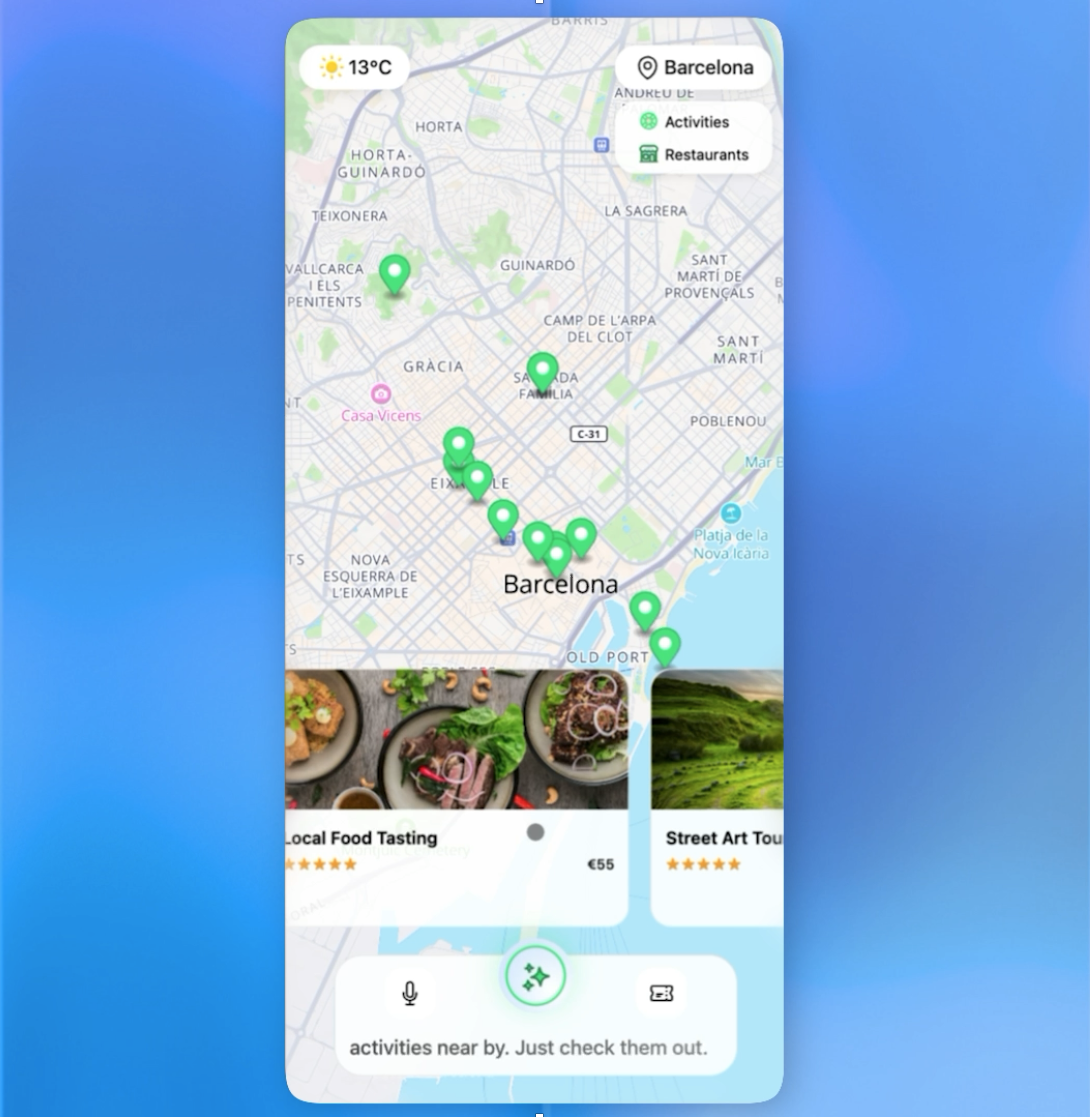
Voice experiences are moving beyond the phone channel into websites and mobile apps. Meet Click To Call, a WebRTC-powered capability that turns voice into a first-class interaction layer inside the digital interface, enabling interactive, multimodal experience that adapts in real time to user needs.
Voice intelligence has advanced significantly in recent years, driven by improvements in real-time transcription, humanlike voice, and generative AI. With the rise of consumer AI apps, users have grown accustomed to interacting directly and instantly, whether through text or voice, without ever leaving their browser. This shift has redefined expectations: communication should be seamless, immediate, and embedded exactly where the user already is.
In customer service, however, the way users access voice interactions largely remains unchanged. A customer still needs to locate contact information on website, dial a number, and leave the digital experience to get help. Because voice is tied to phone numbers and telephony infrastructure, this introduces unnecessary friction and breaks the user journey.
A Voice-Native Digital Journey: Embedding Voice via WebRTC
To address this, Cognigy introduces a WebRTC-based Click To Call capability that enables direct voice interaction from within a web browser or mobile app. A single interaction, such as clicking a button, is enough to establish a real-time voice session without relying on external devices or telephony infrastructure.
Since voice is part of the interface, it no longer operates in isolation. The UI and the conversation layer can remain synchronized in real time, allowing the digital interface to react immediately to user input. What the user says, what they see, and what the system does are no longer loosely coupled steps, but part of the same interaction loop.
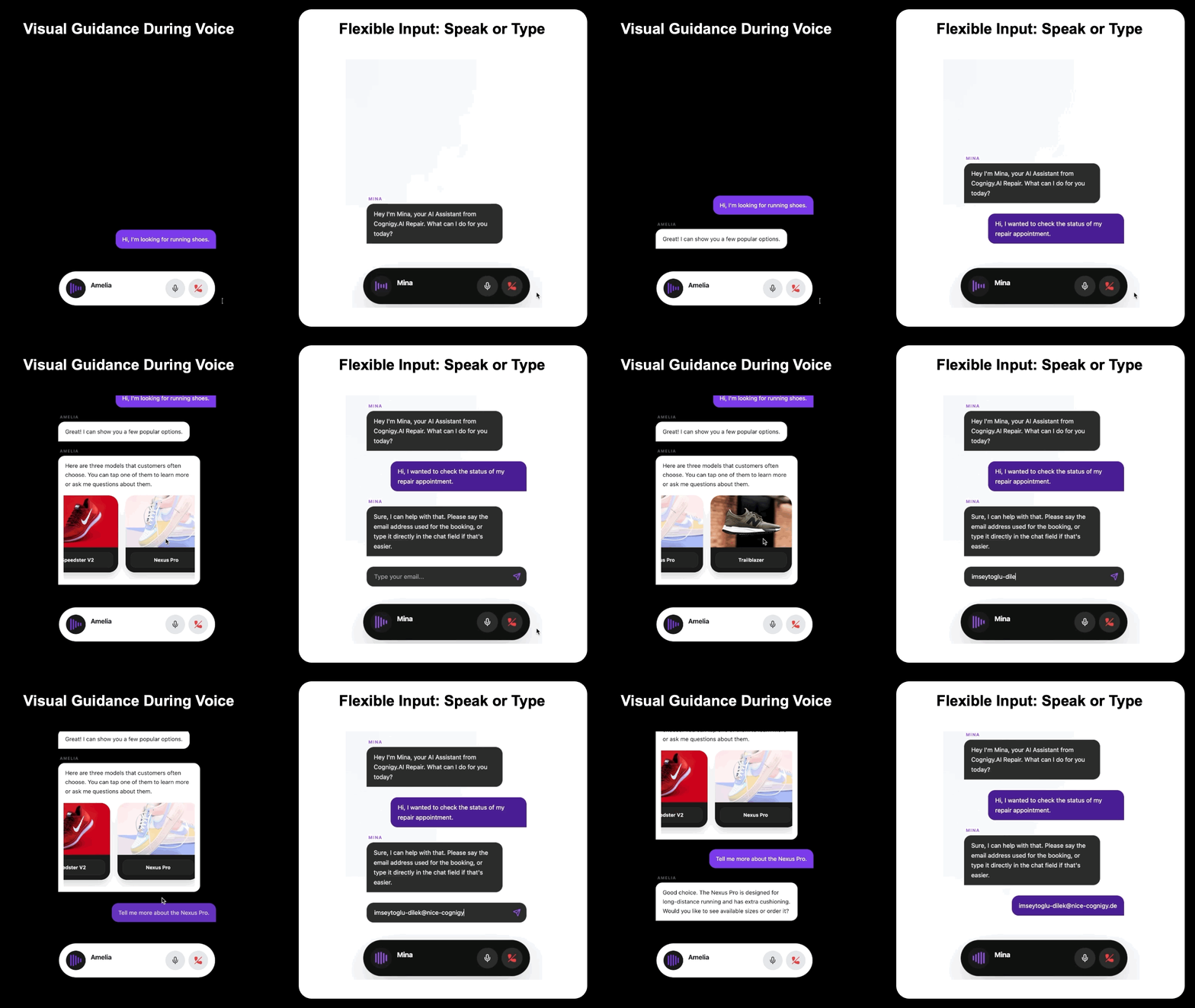
This enables a multimodal interaction model where users can switch between speaking, clicking, and typing without losing context. Visual elements can update based on user intent, and guidance can be presented alongside voice responses. This synchronization between frontend state and conversational logic allows for more cohesive interaction patterns than traditional voice systems.
Click To Call sets the foundation for a different kind of voice experience, one that is multimodal, contextual, and responsive by design.
From Plug-and-Play to Full Control: Choose Your Click To Call Approach
Click To Call in Cognigy can be enabled in two ways, depending on how much control you want over the experience.
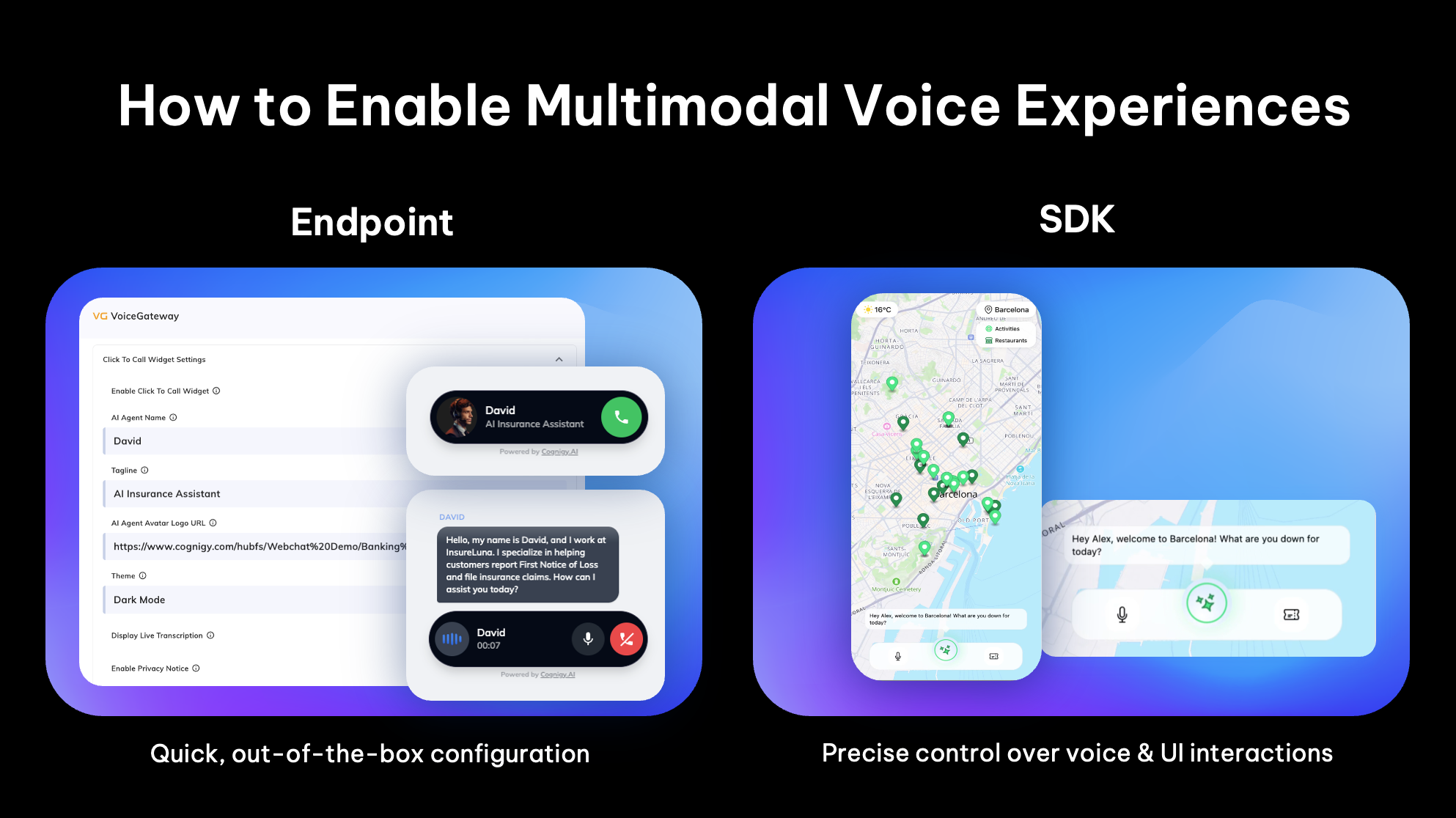
The first option is the Click To Call widget, a ready-to-use component configured directly in the Voice Gateway Endpoint. It lets you embed voice into your application in minutes, with built-in customization for agent identity, styling, and features like live transcription. You can instantly preview and test the setup via the demo page, making it easy to validate the experience before integrating it into a production UI.
The second option is the SDK, which handles the WebRTC connection behind the scenes and gives you full flexibility to design custom voice experiences. This approach is ideal when you need precise control over UI patterns and interaction design, while still relying on Cognigy to manage the underlying real-time communication.
Under the Hood: Real-Time Architecture Without Telephony Overhead
From a system perspective, the architecture combines a WebRTC client embedded in the frontend, the Cognigy Voice Gateway for orchestration, and the AI Agent responsible for handling conversation logic.
When a user initiates a call, the browser establishes a WebRTC session and begins streaming audio in real time. The Voice Gateway receives this stream, transforms it into text via speech service integration, and routes it to the appropriate agent. The AI Agent processes the input, generates a response, and returns it as synthesized speech, which is streamed back to the user instantly.
A key aspect of this architecture is the removal of traditional telephony dependencies. Users connect directly to the AI agent via WebRTC, eliminating the need for SIP trunks or phone number provisioning in the primary interaction flow. SIP infrastructure becomes optional and is only required in specific scenarios, such as handing over a conversation to a human agent in a contact center. In those cases, WebRTC can trigger an outbound call to the SIP target, while keeping the default interaction path lightweight, web-native, and easier to maintain.
Rethinking Voice: Faster, Multimodal, and Built for Modern Applications
The move to Click To Call fundamentally improves how voice performs, integrates, and scales within modern applications.
-
Low Latency, High Audio Quality: By establishing a direct web-based connection, Click To Call enables significantly lower latency compared to traditional telephony. Combined with modern audio codecs such as OPUS, this results in high-definition audio quality that improves both user experience and speech recognition accuracy. Instead of routing calls through multiple network layers, audio is streamed efficiently in real time, making interactions feel more responsive and natural.
-
Multimodal By Design: Voice becomes a native capability within the application rather than an external system. Because the interaction happens directly in the browser or app, users no longer need to leave the interface or switch devices. Voice, UI, and application state remain in sync, enabling more cohesive and contextual interactions across web and mobile environments.
-
Faster Setup with Full Flexibility: Click to Call introduces a much more efficient and flexible setup model. Instead of managing telephony infrastructure, configuration is handled within Cognigy. Teams can get started quickly using the out-of-the-box widget, while still having the option to build fully customized experiences via the SDK. This balance between speed and control makes it easier to adapt voice capabilities to different application needs.
Looking Ahead: Toward Unified Conversational Interfaces
As conversational AI continues to evolve, the focus will shift from enabling individual channels to designing systems that support fluid interaction across them. Instead of committing to voice or chat upfront, users will engage in whatever way feels most natural in the moment, while the underlying system maintains continuity and context. For organizations, this means building experiences that are flexible by design, where interaction modes are interchangeable and the technology remains consistent regardless of how users choose to communicate.
To learn more about getting started with Click To Call, visit our documentation.


.png?length=370&name=Agentic%20Building_Featured%20(9).png)